Artist Trading Cards: The Tiny Art Form You Can Actually Finish
If you've never heard of artist trading cards, you're not alone. But, once you discover them, it's easy to see why so many crafters and mixed-media artists are hooked.
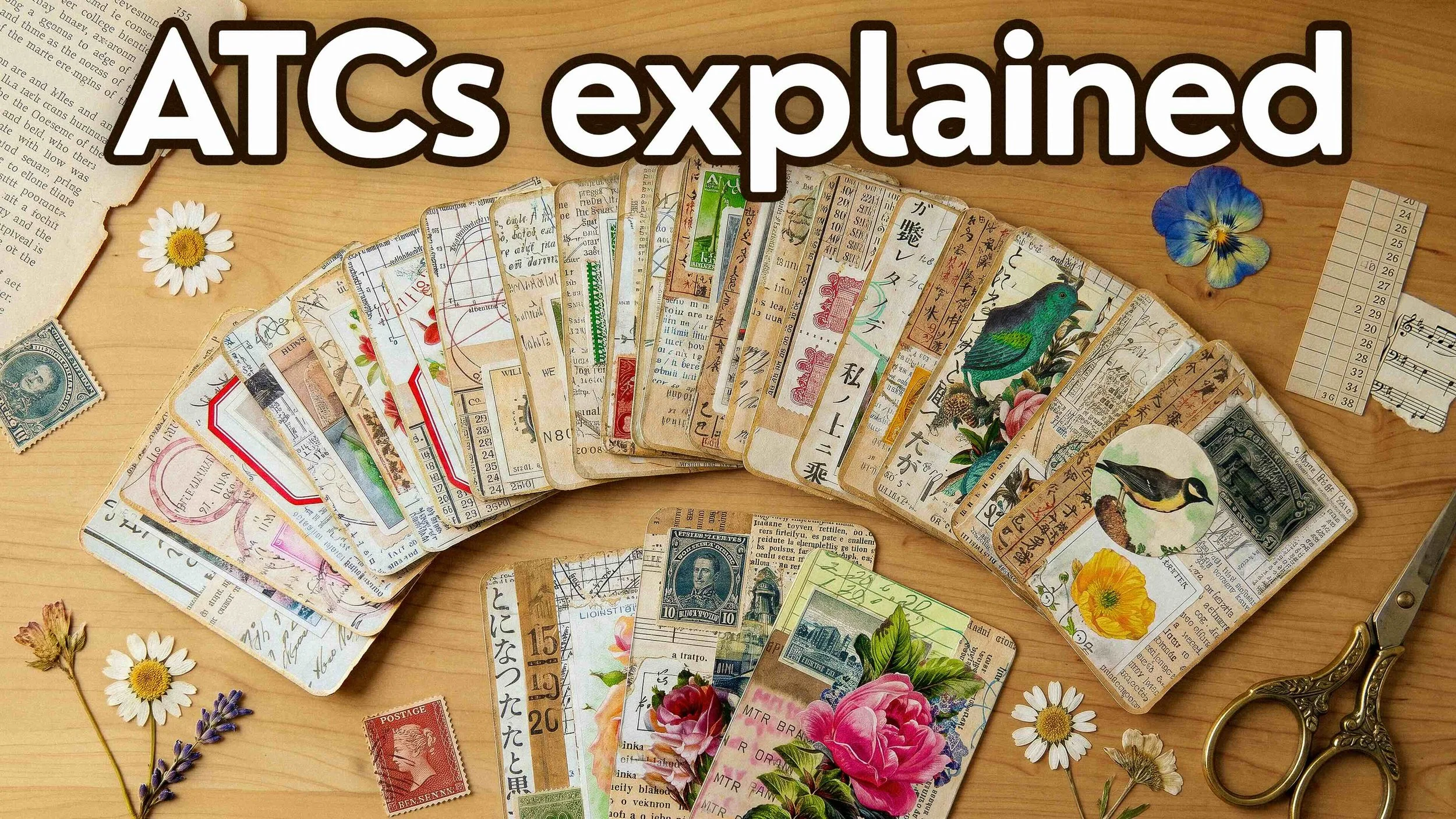
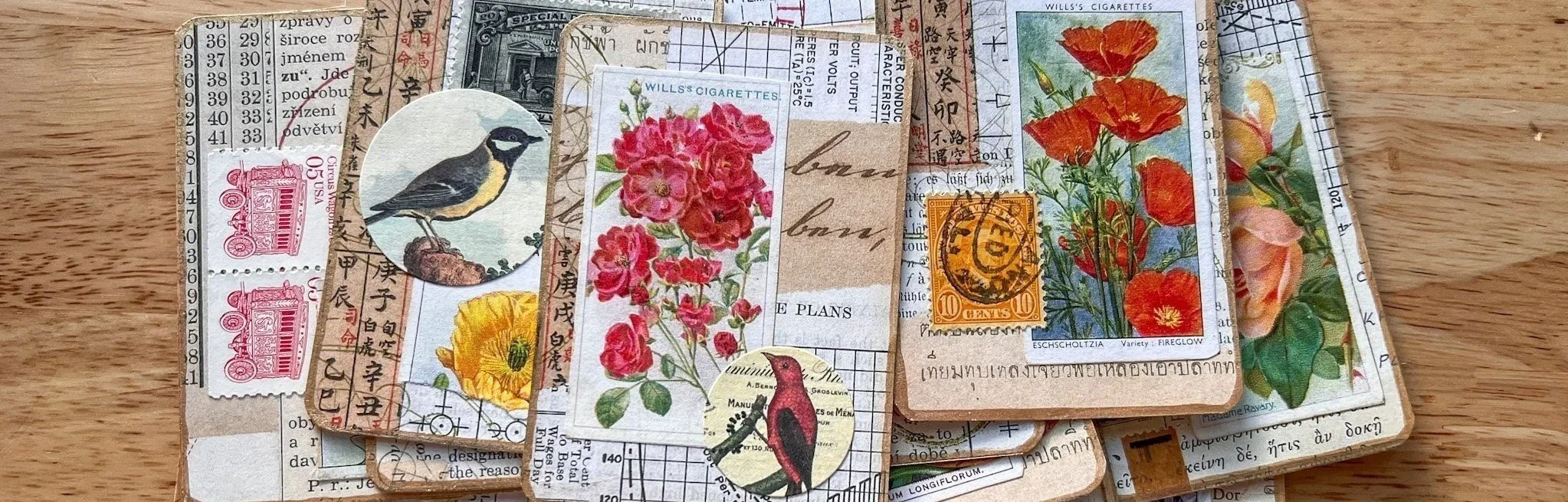
Nicknamed ATCs, these tiny works of art measure just 2.5 by 3.5 inches, the exact size of a standard playing card. Beyond that one dimension rule, everything else is wide open: style, materials, subject matter, and technique are entirely up to the artist.
Where ATCs Came From
The format dates back to the 1990s and has since grown into a full-fledged creative community, with swap groups and exchanges happening both in person and across Facebook groups and other online spaces. There's even a circular cousin of the format called artist trade coins, which is excellent for anyone who wants the same tradition in a round shape.
What really sets ATCs apart from other small-scale art, though, is the culture around them: they're traded, not sold. Artists make them and exchange them directly with one another, which keeps the whole practice personal and completely outside the traditional art marketplace.
Why the Format Is So Addictive
A few things make ATCs especially appealing, and they tend to reinforce each other:
You can actually finish one. Unlike bigger projects that can spiral into something overwhelming, an ATC is small enough to complete in a single sitting, or sometimes several in one sitting. That sense of genuine completion is rare in creative work and shouldn't be underrated.
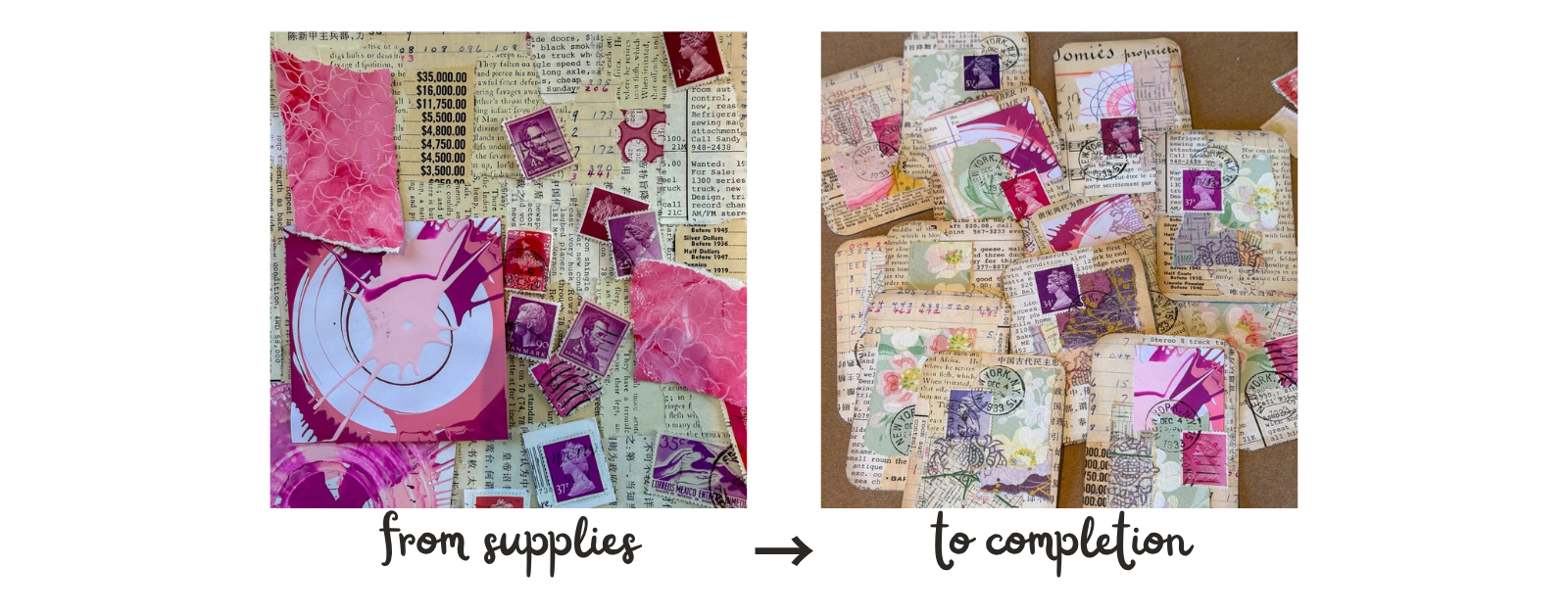
The masterboard method multiplies your output. Rather than working on cards one at a time, many artists build up layers of color and texture on a larger sheet of paper, something like a 12x12 piece, and then cut it down into card-sized pieces once the background work is done. A single session can yield anywhere from six to sixteen finished cards.
There's very little pressure. Because you're usually working on a batch at once, no single card carries the weight of "getting it right." That makes ATCs a great space to experiment with new techniques or materials without worrying about ruining a big project.
They become a personal record over time. A growing stack of ATCs ends up documenting an artist's creative journey–the colors, textures, and techniques they were drawn to at different points–almost without meaning to.
Getting Started with What You Already Have
You don't need special supplies to make your first ATC. Leftover paper scraps, a scrap of cardboard, and a playing card to trace as a template are enough to get going. Trace the card's outline, start layering scraps and collage elements within the borders, and retrace the edges as needed to keep track of your boundary as you build up layers. Once the surface is filled in, cut the pieces down to size, and you're done, at least with the first layer.
The beauty of this approach is that it's fully flexible: you can complete a batch in one sitting or set it aside and pick it back up whenever more scraps pile up.
What to Do With a Finished Stack
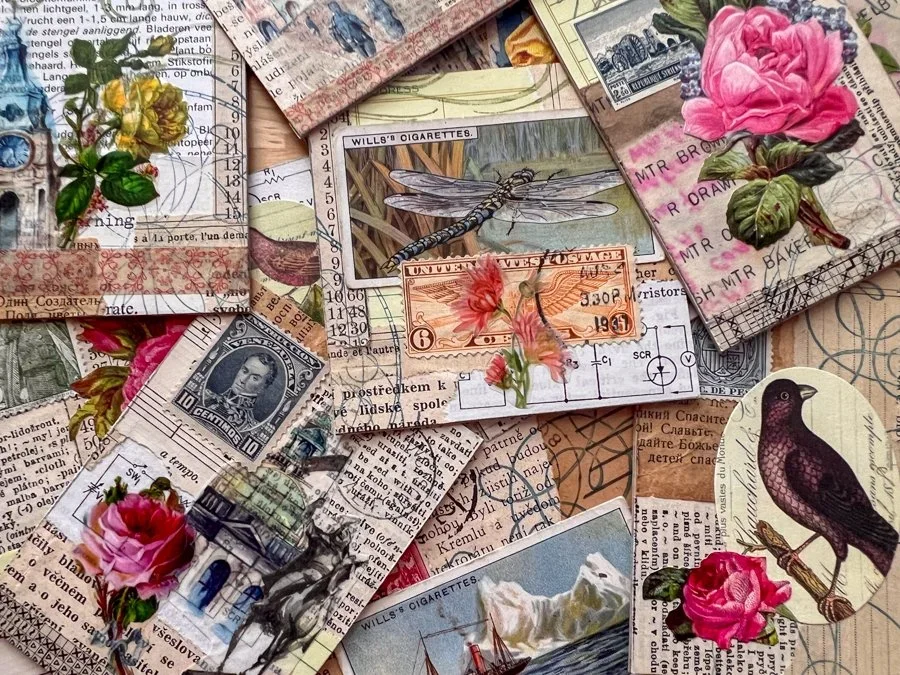
Once you've got a collection of cards, there are two main paths: keeping them or sharing them. For keeping, plastic trading card sleeves in a binder (the same kind used for baseball or Pokémon cards) work great, letting you flip through your work like a portfolio. Hole-punching cards for a small display ring is another option, and there are also purpose-made ATC storage boxes, often shipped flat and assembled at home, that can be decorated however you like.
For sharing, you don't need to join a formal swap group. Tucking a card into a letter to a friend is enough. If you do want a structured exchange, Facebook groups are a good place to look, and dedicated art communities, like my Vintage & Collage Club, run themed swaps as well.
At its core, the appeal of ATCs isn't really about the cards themselves, it's the reminder that not every creative project has to be big to count. A finished stack of small art is real proof of a creative practice, one card at a time.
Curious to see the full masterboard process in action? Head over to my YouTube channel to watch the complete video explaining ATCs. And don't forget to subscribe for more small-format art tutorials.